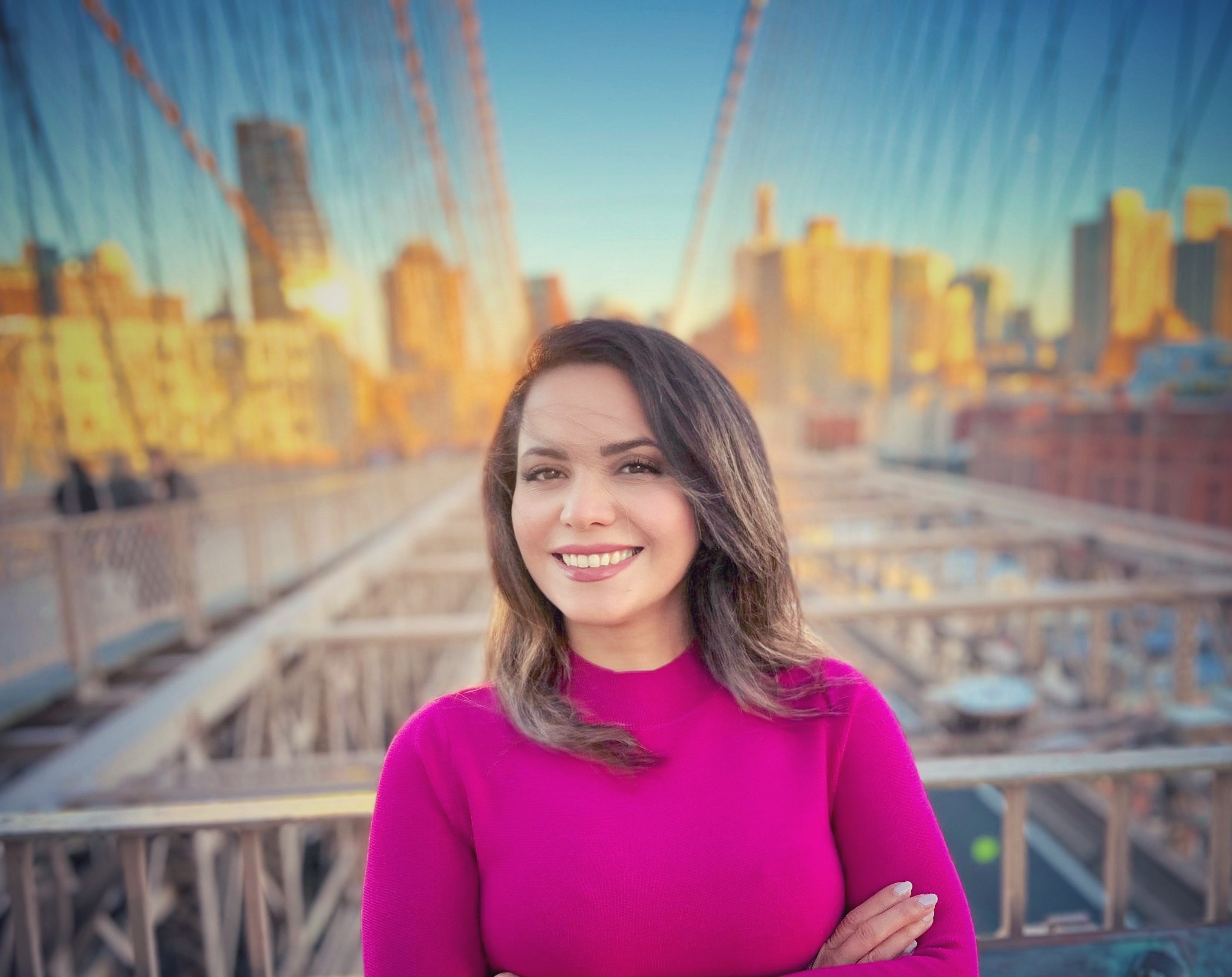
Hello! My name is Samaneh Nemati, Sam for short, and I am a cognitive neuroscientist with a background in biomedical engineering, with 10+ years of experience building data-driven models for biomedical images/signals, neuroimaging, and multimodal clinical research. My work sits at the intersection of biomedical engineering and neuroscience, where I use MRI, EEG, statistical modeling, and machine learning to turn complex brain data into interpretable biomarkers of brain health and behavior.
I came to the brain through math. As an undergraduate in biomedical engineering, I fell in love with imaginary numbers, strange and seemingly abstract objects that kept me up late working through textbooks. They finally made sense in a Signals and Systems class, when I realized they lived inside Fourier transforms, and Fourier transforms could turn the wiggling, chaotic lines of EEG into meaningful rhythms of neural activity. Ever since, that has been the thread through all my research: using math, engineering, and machine learning to turn the human brain's noise into signal, and to understand how that signal breaks down when the brain is injured.
My current research brings together neuroimaging, computational models of aphasic naming, and controlled lesioning of large language models. The aim is to connect where a function localizes in a model to where its loss produces deficits in patients, and to use that link to inform neuromodulation for aphasia recovery. Across projects I work with multimodal MRI, EEG, and machine learning, and I'm most drawn to questions where rigorous computational methods can show how the brain supports language and cognition, how that breaks down after injury or with aging, and how those insights can inform neurorehabilitation and recovery.
I'm passionate about applying this foundation in neural signal processing, clinical trials, and brain-behavior modeling to neurotechnology, BCI, and neurorehabilitation, where rigorous data science can help improve patients lives.